





Author Archives: Contributor
Snowmobile Safety: Don’t Drink and Ride
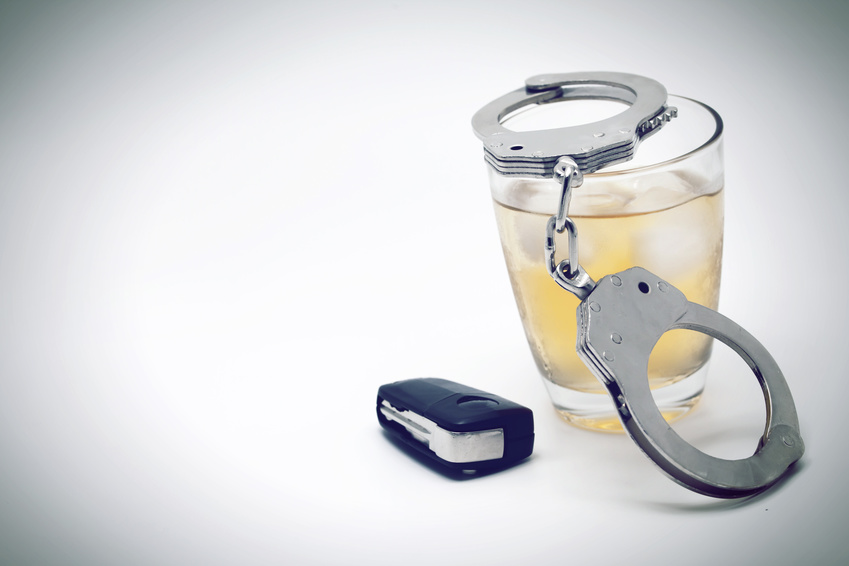 Snowmobile trail season is fast approaching in many parts of the country, and with it, the time to enjoy winter “recreation” of all kinds. But before you order a beer at the restaurant or accept a drink with friends before a ride, think twice about alcohol and snowmobile safety.
Alcohol is the number-one drug problem in the U.S., not least of all because of the ways it impairs a driver’s ability to properly react to the dangers of the road or the trail. While drinking and driving laws for cars and other road vehicles are well established in most states, the rules and repercussions of operating a snowmobile under the influence are often less defined or universal.
In Minnesota and Michigan, for instance, if you are caught driving a snowmobile with a blood alcohol content level higher than 0.08%, those violations can be tied into your driving record. You can be charged with a misdemeanor or criminal felony, depending on where you are and your level of intoxication.
However, many local and state snowmobile associations promote a voluntary “zero-tolerance” policy for drinking and riding. Drivers can take a pledge not to consume any alcohol until they’re done riding for the day as a way to encourage safety on the trails.
“We can dance around the subject all we want, we can say ‘know when to say when’ or other campaigns, but bottom line is that there is only one safe stance to take,” said Michigan Snowmobile Association executive director Bill Manson.
Alcohol was a factor in 38% of fatal snowmobile accidents in Michigan in the 2007-2008 season, which is actually a relatively low number compared to other areas. In Minnesota that same year, alcohol was involved in 44% of snowmobile fatalities, and in Wisconsin, 64%.
Along with your own safety, riding sober helps protect other people on the trails. Few will forget the terrible incident earlier this year at the Iditarod race in Alaska, in which a heavily intoxicated snowmobiler crashed into a sled team and killed one of the dogs.
Stricter laws on alcohol and snowmobiles “would be a good way to increase safety and enjoyment,” said Gary Eddy of the Wisconsin Bureau of Law Enforcement in the Department of Natural Resources. “We will start seeing an increase of families out there snowmobiling. Every season, we hear that people won’t ride at night or on weekends because drunks and crazies are on the trail. It’s a terrible thing to hear that people are afraid to be on public trails.”
Snowmobiles Tempt Thieves — Here Are 3 Ways to Prevent Snowmobile Theft
 With winter approaching, many outdoors enthusiasts are looking forward to hitting the trail on their snowmobiles. Although winter sports and recreation is all about having fun and enjoying the season, there are those who are tempted to commit a crime that can put a real damper on this time of year: snowmobile thieves.
Nearly 12 million people are processed through jails across the country in a given year. However, many thieves who target snowmobiles are never caught or charged. In one recent incident in Rochester Hills, Michigan, a woman reported her stolen snowmobile to police and provided them with the address of the thief. The snowmobile was found in the man’s garage, and was released pending further investigation.
Some criminals will steal a snowmobile for their own pleasure or to sell. Other times, thieves will try to steal valuable snowmobile parts. In a recent burglary and theft case, two employees stole copper sheeting and snowmobile parts from an employer in an attempt to sell the materials for scrap. Luckily, in this case, the criminals were apprehended and charged, and the snowmobile parts were returned to their owner.
But some snowmobile owners are not as fortunate when they experience a theft. Because snowmobiles can be easier to steal than automobiles and are oftentimes more valuable than other wintertime recreational equipment, many owners never get their vehicles back. In order to help prevent snowmobile theft, you should:
- Remove and store the ignition key
Believe it or not, most keys are stolen out of garages and have the keys still in the ignition. If a thief can’t locate the key, he or she may not even attempt to steal it because of the extra work involved.
- Secure your vehicle
Whether you park in a locked trailer, secured garage, or use cables or chains to attach to a tree, you will want to take steps to make sure no one can simply walk away with your vehicle. Don’t park at the top of a snow bank or leave your snowmobile unattended while you’re out. Even if you think it will be fine in your car park, anchor your snowmobile to something for extra security.
- Keep documents safe
In case of a theft, you’ll want to have legal proof that you own your snowmobile. Do not keep documents in a compartment on the vehicle — or if you need to, make a photocopy. If by chance your vehicle is still stolen after following the above tips, you’ll be able to prove your ownership to police and will come in handy if you have snowmobile insurance.
Follow these tips to keep your vehicle safe from thieves this season. You’ll want to enjoy your snowmobile for many winters to come.
U.S. Overtakes France as Top Ski Destination in the World
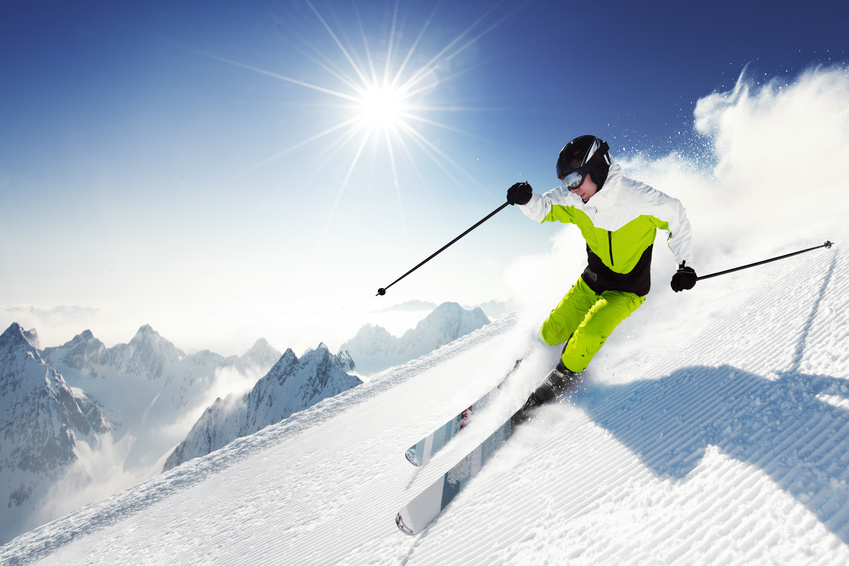 Internet users conduct over 100 billion global searches each month, and it appears that these days, more winter sports enthusiasts are searching for skiing destinations in the U.S. than any other country.
For years, France has held the title of top winter sports destination in the world, with its pristine Alpine resorts and Pyrenean vistas. The U.S. has always been a close rival, but over the past two years, France has seen the volume of its ski resort attendance take a smooth slide down the slopes, putting the U.S. at the top.
Marie Tissier, the spokesperson for Domaines Skiables de France (DSF), blames the weather for last year’s low attendance, saying, “The start of the season was very complicated because there was very little snow at low and medium altitudes … The larger stations did OK, but the smaller and middle-sized resorts didn’t come out of it so well. The problem was basically the weather, and that’s out of our hands. What we need this year is more snow earlier.”
The U.S. simply had better snow conditions last season. American resorts experienced an increased number of ski days on the west coast.
Additionally, the French Research Centre for the Study and Observation of Living Conditions reported back in 2010 that the cost of skiing holidays has reached levels beyond the means of most French families.
“Apart from the cost of winter holidays, it’s above all the cost of the sports and activities that 40% of French people object to,” said the report. “The general public has shown a desire for less costly activities.”
This possibly explains why less than 10% of French people actually take to the slopes for skiing and snowboarding each year. The country is home to more than 357 resorts, accounting for just less than nine percent of the world’s share, and the majority of skiers at these resorts are visitors from other countries. With the weather conditions becoming less suitable for good ski days, it seems that more skiers across the globe are choosing to hit America’s slopes instead.
Snowmobiling in Yellowstone: Get In Before It’s Too Late
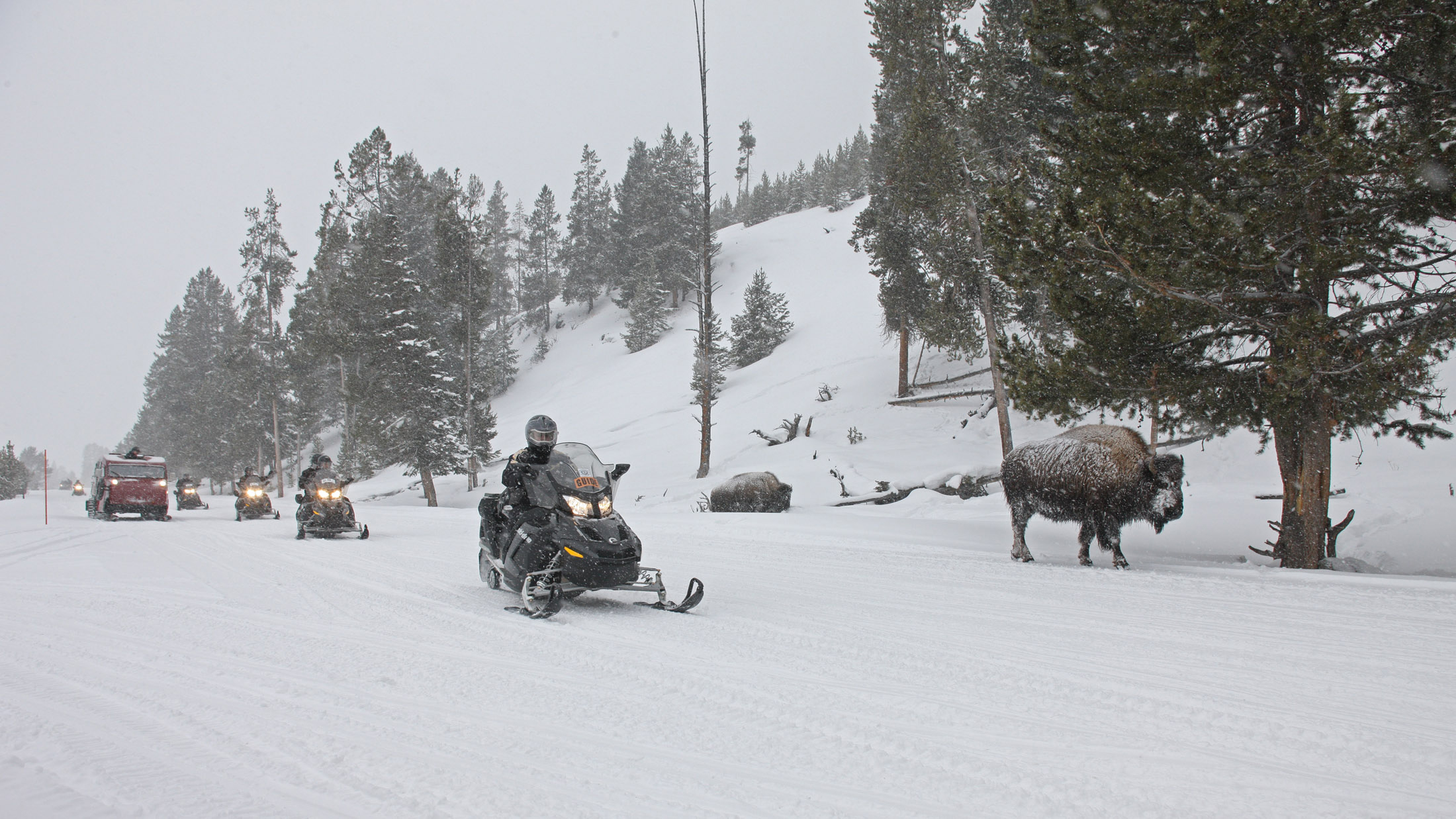 Time is running out for snowmobile enthusiasts looking to hit the trails in Yellowstone National Park — perhaps in more ways than one.
The application window is now open for non-commercially guided snowmobile trips through Yellowstone during the 2016-2017 winter season. All travelers who wish to ride by snowmobile through the park must apply for a permit, which are distributed through a lottery system.
The application deadline is September 30, and lottery recipients will be notified about their permits in mid-October. Any remaining permits will become available on a first-come, first-serve basis in November.
To ride through the park, it’s safety first: all riders must have a valid state-issued driver’s license and complete the free online Yellowstone Snowmobile Education Certification program. Something as minor as a sprained ankle, which affects some 25,000 Americans every day, can turn into a serious issue out in the park’s vast wilderness without the proper knowledge.
At the same time, snowmobilers might be eager to get a ride in at Yellowstone at all while there’s still snow cover to be found in the park.
Recent research suggests that snowpack levels have been declining in the Yellowstone area over recent years, and will only continue to get worse as global temperatures continue to rise over the coming decades.
Mike Tercek, a Montana-based ecologist and co-author of the study, estimates that the winter recreation season could be shortened by 16% by 2050, and 26% by 2090.
“This isn’t just an isolated incident when you have a bad year,” Tercek told the Idaho Falls-based Post Register recently. “What we consider to be a bad year now is going to be average in the future.”
Less snowpack means fewer usable snowmobile trails, especially around the West Entrance area in Montana. Higher elevation areas may continue to receive adequate snow, Tercek said, but “it’s something we’re going to have to adapt to.”


